Two celebrated temples on Luxor’s East Bank tell different parts of ancient Thebes’ story. Here is what to notice when you visit both.
Karnak is an extraordinary complex
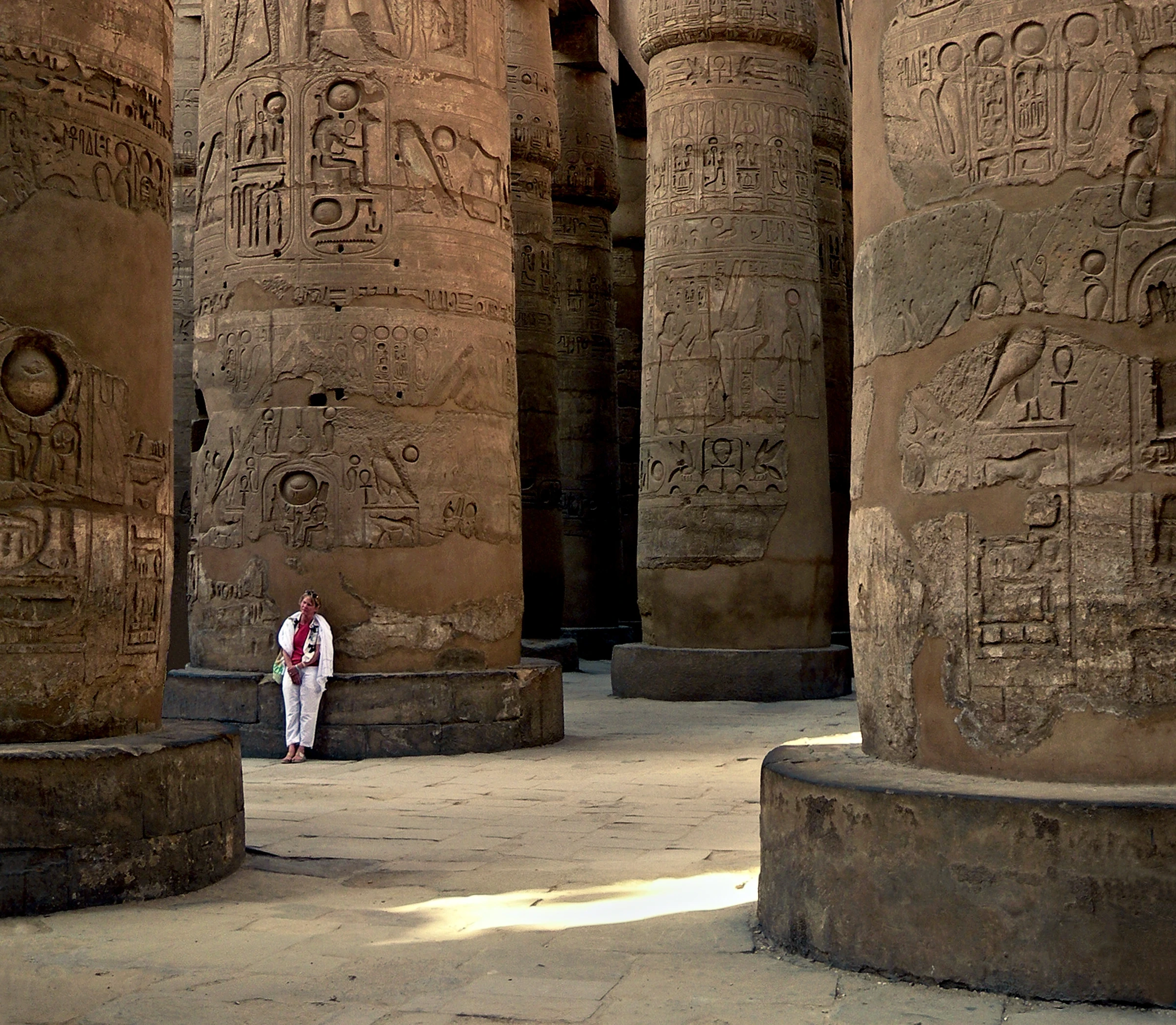
Karnak grew over many centuries, with successive rulers adding courts, pylons, obelisks and halls. Its Great Hypostyle Hall, crowded with enormous columns, is one of Egypt’s most memorable architectural spaces.
The complex was closely associated with Amun and the religious life of ancient Thebes, now Luxor. Allow plenty of time to walk and look up.
Luxor Temple sits within the living city
Luxor Temple has a more compact visitor route and stands close to the city’s modern streets and Nile-side atmosphere. Its columns and monumental entrance can look especially atmospheric later in the day.
In antiquity, a ceremonial avenue of sphinxes linked Luxor Temple with Karnak, helping connect the sites during important festivals.
How to visit both
Start with Karnak when you have the energy for a longer walk. Luxor Temple can pair naturally with a late-afternoon city visit, depending on the opening arrangements at the time.
Seeing both gives a fuller picture than treating them as interchangeable monuments: they belong to one sacred landscape, but each has its own character.
Before you go
- Give Karnak more walking time
- Consider late afternoon for Luxor Temple
- Use the processional avenue and festival history to connect the two sites
Frequently asked questions
Are Karnak and Luxor Temple the same site?
No. They are distinct East Bank temples historically connected by a ceremonial avenue.
Check current tickets and local arrangements before travelling; details can change.